
“I don’t think there’s good art without having a dark underbelly.” Karni Arieli
Short Bio
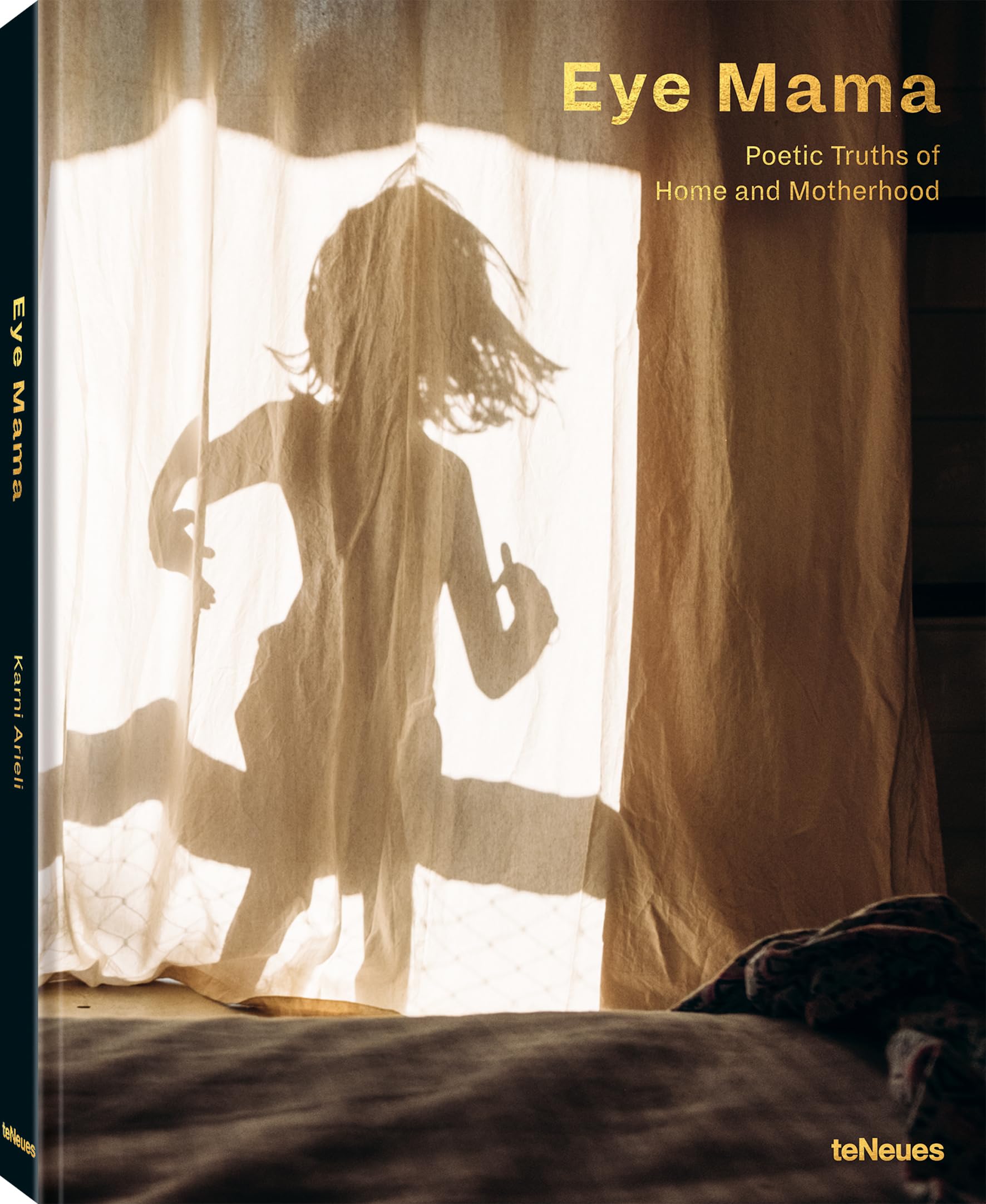
Karni Arieli is a photographer, filmmaker, and curator based in Bristol, and one half of the BAFTA-nominated directing duo Karni and Saul. Alongside her film work, she created Eye Mama, a project that began during lockdown and grew into something much larger: a global photographic archive of care, made by photographers who are mothers, parents, and carers. What drives it is not branding, or nostalgia, or the soft-focus mythology of family life. It’s a sharper instinct than that: to give visibility to what has been lived, seen, and too often left out.
https://www.sulkybunny.com/
You’ve been very clear that Eye Mama isn’t just “mothers sharing pictures.” What was the thing you felt was missing?
I think what I felt was missing was a serious photographic body of work looking at motherhood and care from the inside. Not as a marketed version, not as influencers, not as a soft ideal.
I was seeing images during lockdown that felt like a dark truth, a duality.
That spoke to me as a photographer.
I wanted to say: this is a photographic portfolio looking at a humanity issue, which is what does care look like, by the carers themselves. And that could take all kinds of forms, but I focused especially on women and mothers.
It wasn’t “a couple of moms sharing photographs.” It was a serious photographic portfolio.
https://eyemamaproject.com/
https://www.instagram.com/eyemamaproject
Why did it have to begin then, during lockdown?
Because everything collided.
I was a mother in lockdown, trying to keep the kids sane, trying to keep myself sane, trying to work, trying to understand whether my work still mattered.
If Saul was doing a money job, could I still be in the studio?
Could I still show up for my work?
When does it matter?
When does it matter to my kids?
To my identity.
And at the same time, I didn’t see motherhood depicted in a way that felt truthful to me.
It never felt cool, or meaningful, never felt in the right context, never felt honest.
I also didn’t see myself as a female artist depicted much either.
So the work side of me and the motherhood side of me wanted to meet exactly when it was hardest.
As a photographer, that’s how I make sense of the world.
If I lose that, I’m less stable and less whole myself.
So in a way, the project helped me make sense of everything.
What feels missing for you in more polished or idealised images of motherhood?
I don’t think there’s good art without having a dark underbelly.
Truth has a dark underbelly.
Photography has a light and dark.
You can’t expose photography without light and dark.
You can’t have beauty without shadow.
The truth is, motherhood is not one thing. It’s not some perfect woman dressed in white, giving to her children, having a career, being a loving wife, all at once, with grace.
That’s not a truth.
The truth is it’s going to be shit and it’s going to be beautiful, and both are going to exist together.
I think Eye Mama was my homage to that truth.
What started to become visible to you once you began gathering these images?
I started to realize how much had been overlooked.
Women were taking self-portraits throughout the history of photography, but nobody was elevating them and nobody was talking about it.
And as a collective vision, this work had really been overlooked – partly because it’s invisible, partly because mothers often don’t have the time or support to document it, and partly because curators didn’t open the door or deem it worthy.
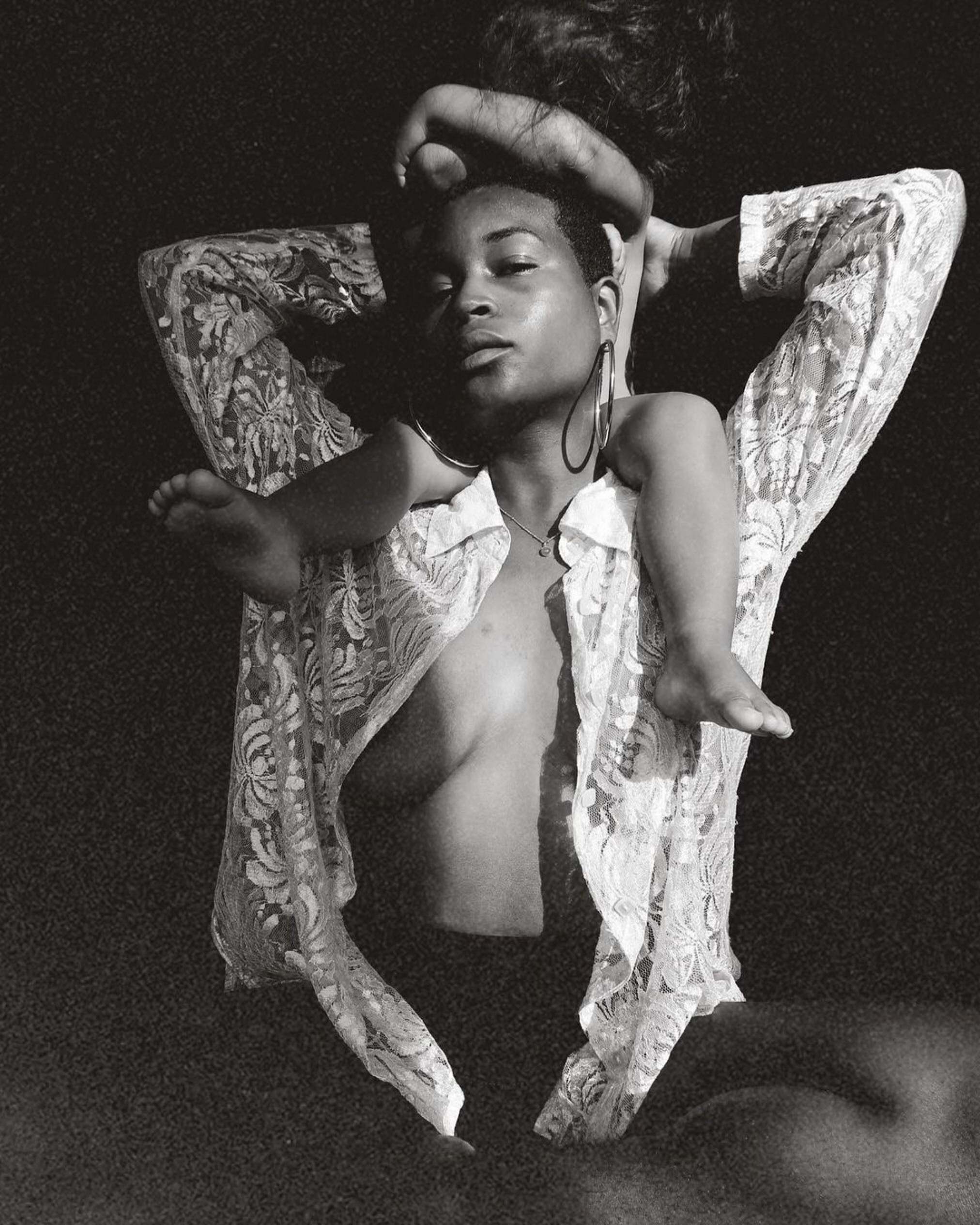
Was there one image you particularly identified with?
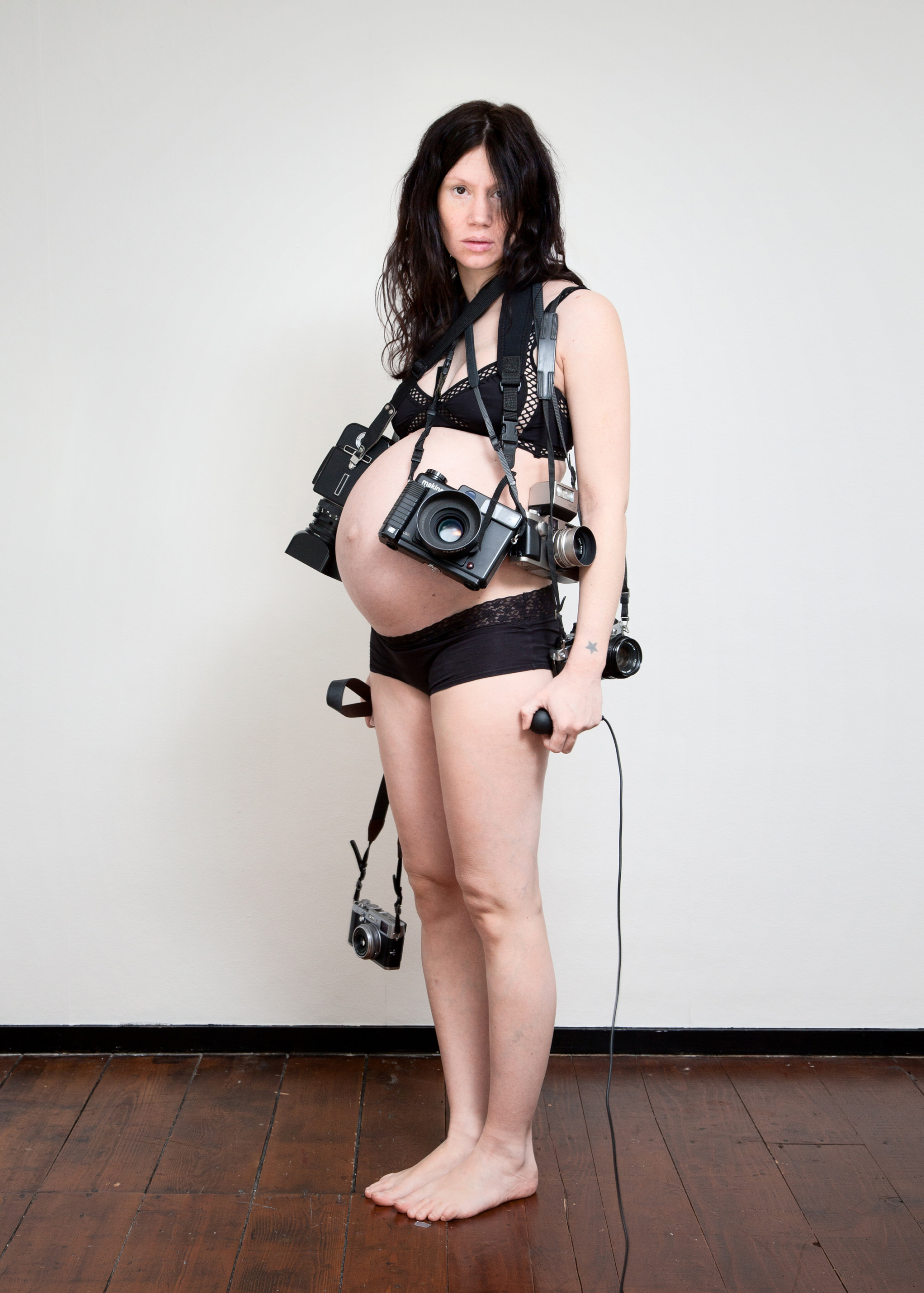
Yes ! one of my favorite images is one that feels very unclassical for motherhood photography.
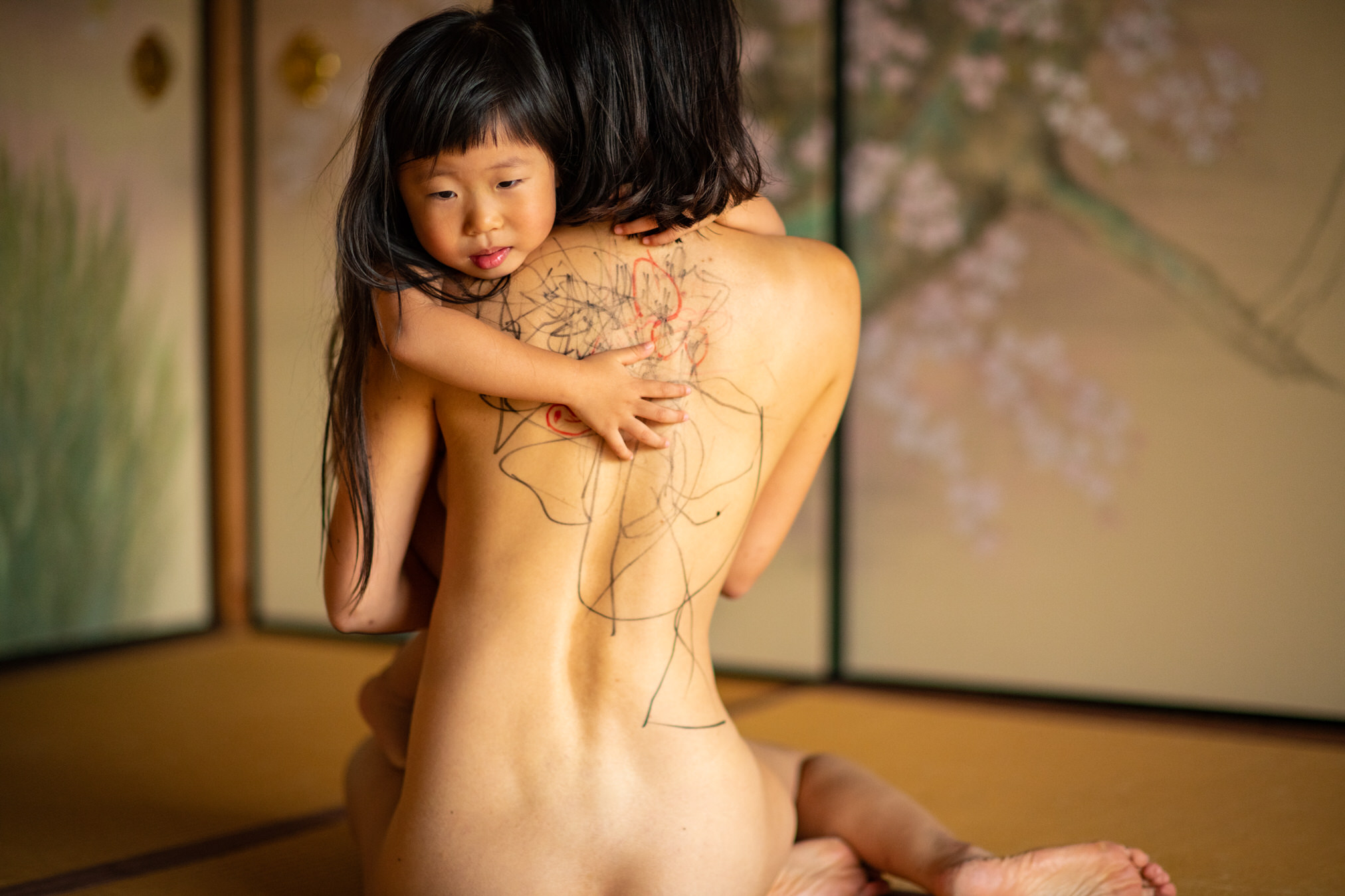
It tells me, almost in a sculptural way, the feeling of what it means to be a mother.
You don’t need faces for that, and you don’t need clichés.
The mother is very invisible, but she’s also like a spider-morphed creature with many limbs and arms, which is often what it feels like – that your children are an extension of you.
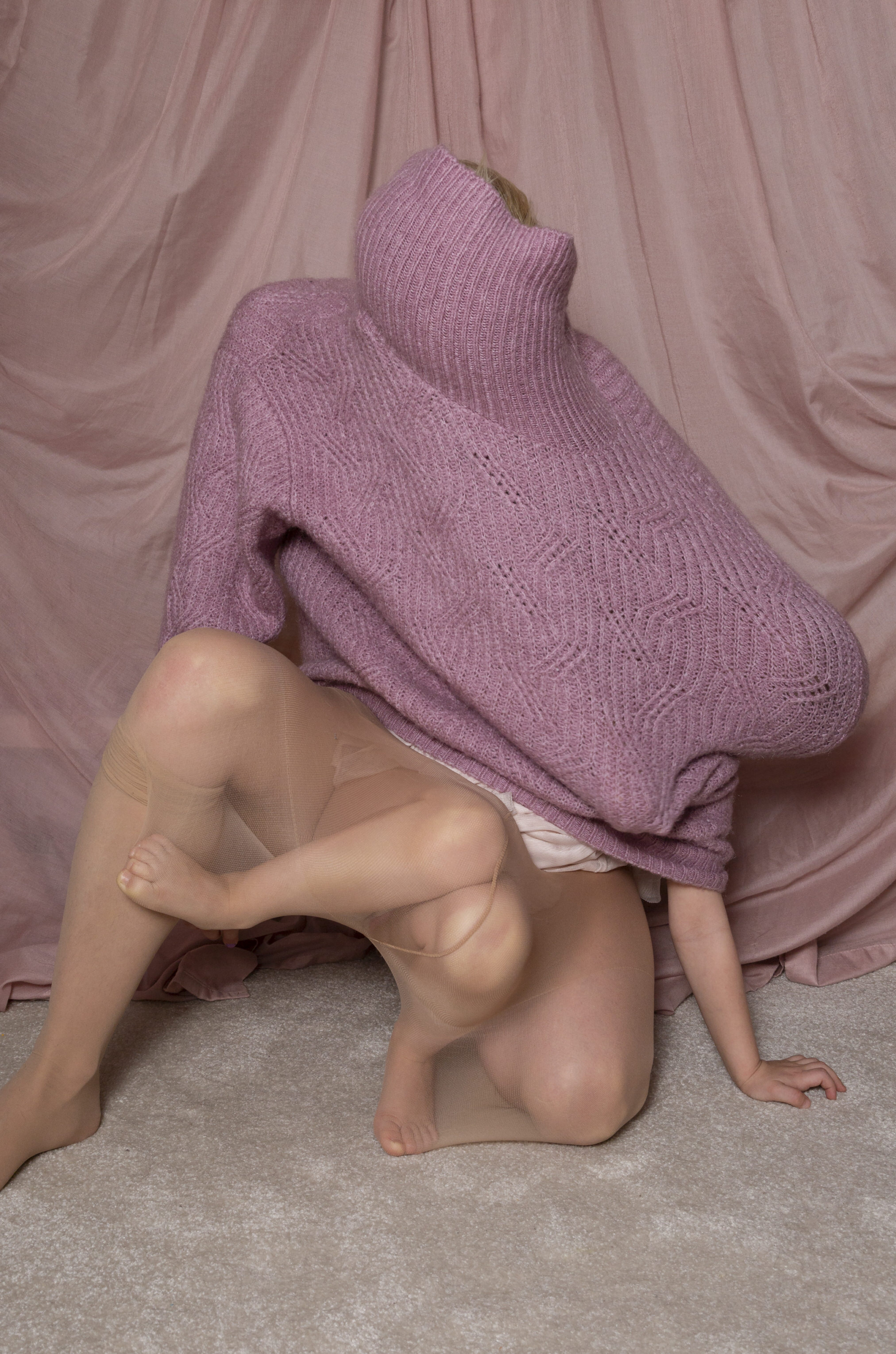
When did you begin to feel that Instagram wasn’t enough for what Eye Mama was becoming?
When I realized Instagram was never going to be enough.
At first it was perfect for community. I knew how to use it, I could reach out to photographers, women could submit through the hashtag, and it grew in a way I never expected.
But once it became that big, I started asking:
what do I do now?
Instagram is not a safe long-term place for women and mothers.
We get censored, we get removed, and I don’t trust its longevity.
So I started thinking about safeguarding the images.
Taking a long list every year, maybe 500, maybe 1,000, and keeping them somewhere people can access them outside social media, with links back to the photographers.
To me that archive is about history. It’s about being able to look back and ask: what did care look like in this moment? What did motherhood look like when photographed by the people living it?
Because so much of that has been invisible.
https://www.instagram.com/eyemamaproject/?hl=en
When you look at submitted work, what makes you stop?
The image. Always the image.
I wanted the playing field to be more level.
If you’re a photographer and you’re looking at motherhood in any way, and the image is meaningful, I’m going to look. Published, unpublished, known, unknown, it doesn’t matter.
If I like the image if it moves me, I’m not going to look at your credentials.
That was important to me because I think women get excluded in these really quiet ways.
So for me, finding hidden photographers, finding someone no one has already clapped for, that’s exciting.
That feels moving. And if the project helps some of those women feel seen, then the project itself becomes alive in a useful way.
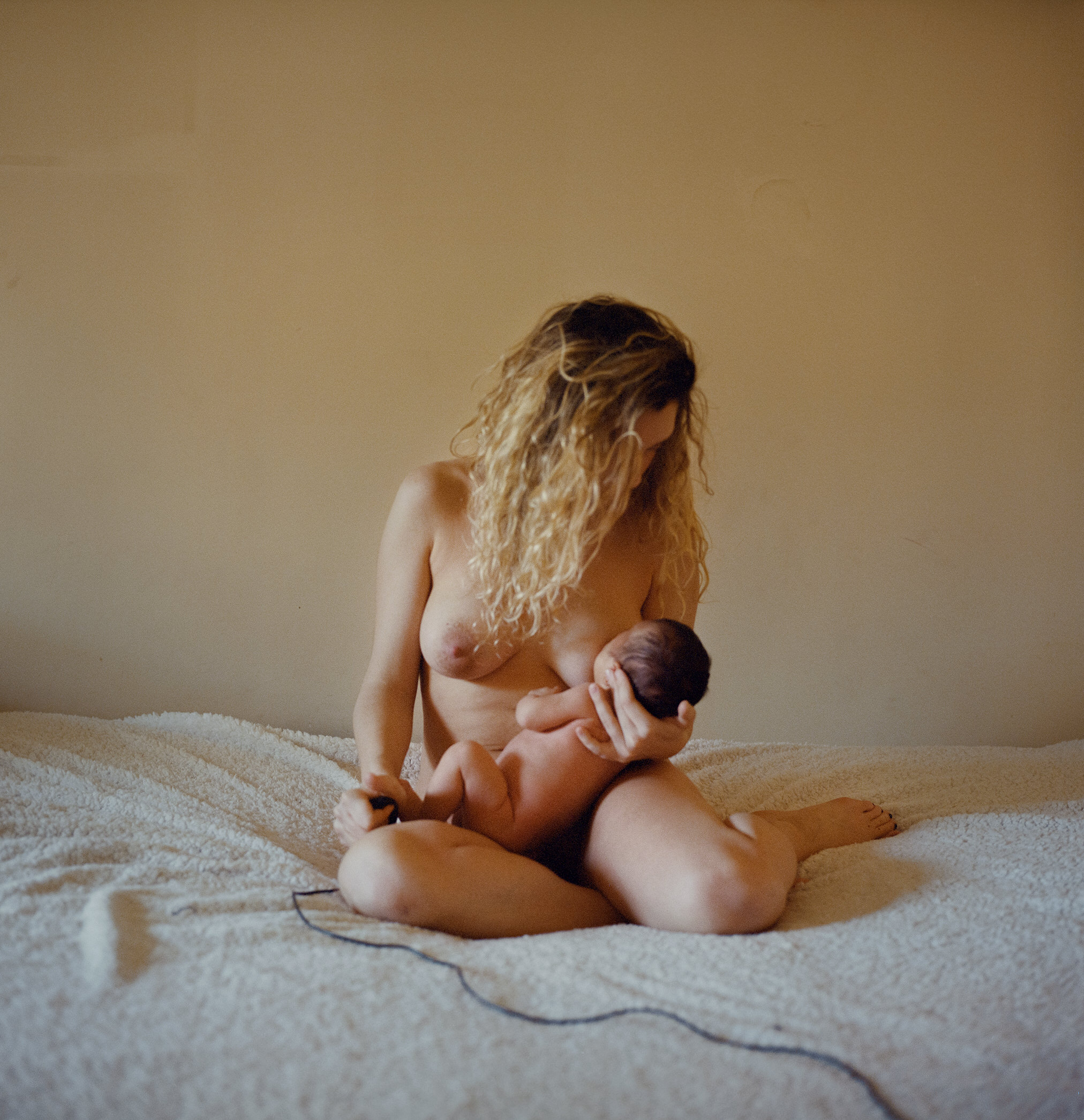
What happens, photographically, when the person living the experience is also the one making the image?. Is that what interests you about the so-called “mama gaze”?
Yes, absolutely.
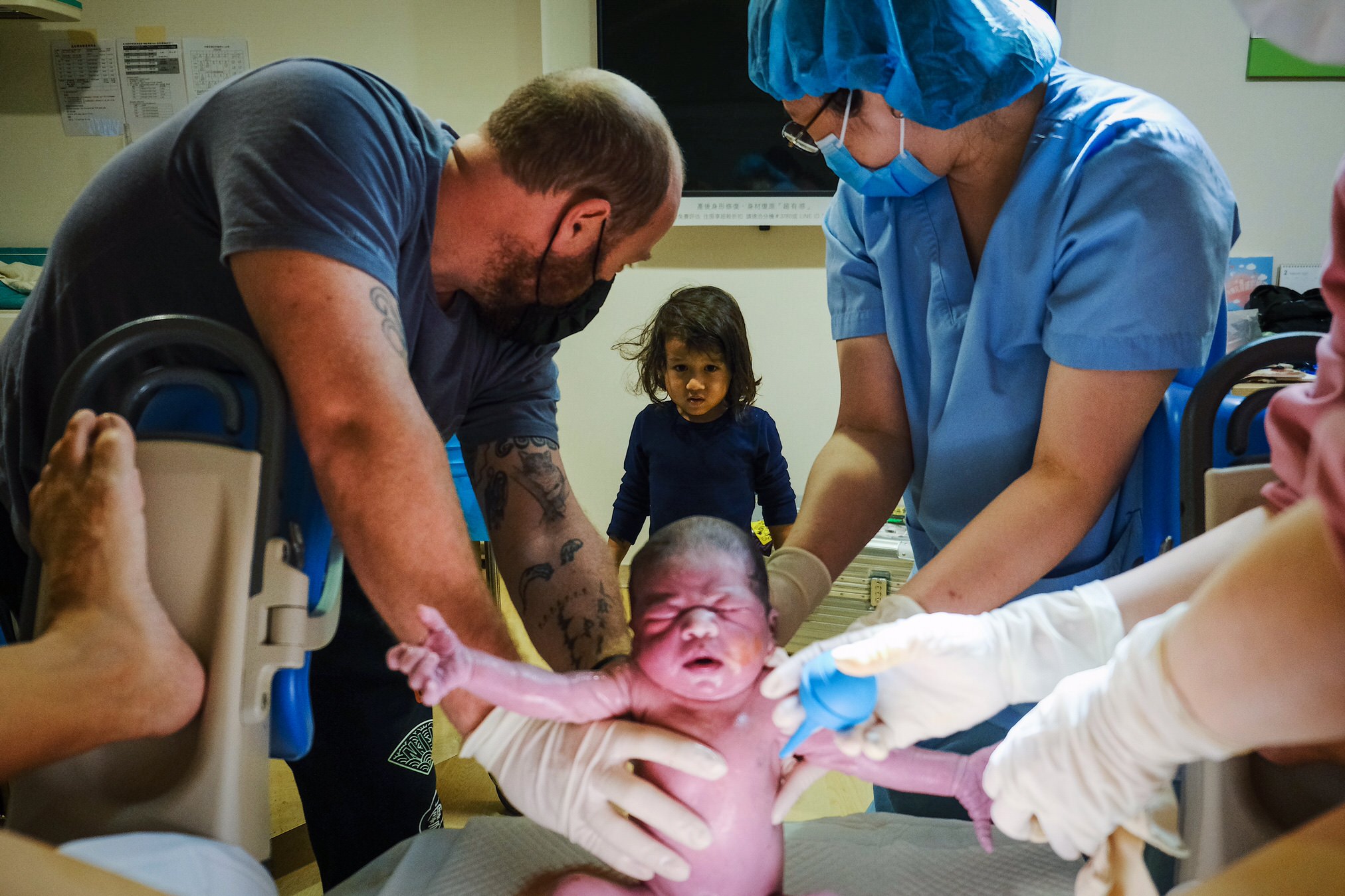
There’s that image in the book of a mother photographing her own birth.
To me that’s the ultimate self-portrait.
It sits at the absolute junction of her identities.
She’s going through this surreal, out-of-body experience, and she’s also trying to make sense of it photographically.
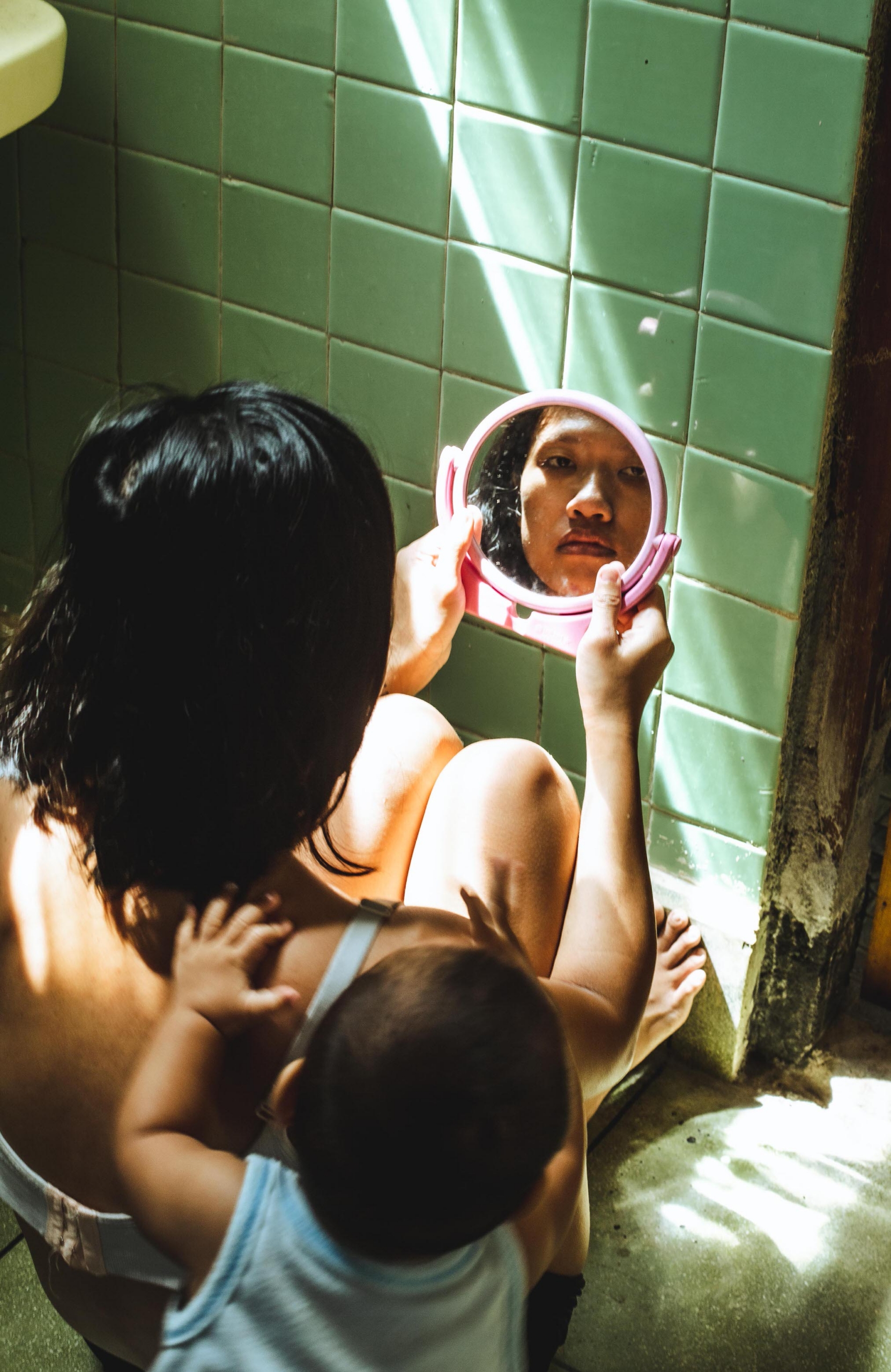
That’s what interests me. Not an image telling you what to think, but an image showing you some kind of truth and leaving you to decipher it.
That’s what good art is.
You don’t want the perfect, misleading image of motherhood.
That’s not helpful to women. It sets us up for failure.
The images I love most are often the least classic. They’re more sculptural, more ambivalent. They don’t explain themselves too neatly.
Has Eye Mama changed the way you see photography?
Definitely.
The more I curated, the less I felt the need to put my own photography forward.
What other women were shooting became like peepholes into houses and homes worldwide.
It was my entry into all these stories and existences.
It became more exciting to me than telling my own story.
And I realized something simple: sharing happy images doesn’t necessarily make you happy.
Sharing truthful images can bring more happiness, because they connect you to other humans.
They make you feel seen. And in the end, I think we’re all just trying to feel less alone in the world. Photography is such a great portal for that.
You also speak about the project changing you as a woman, not just as a curator. How?
I think it made me use my weakness as my strength.
For years, in film and photography spaces, I felt like the woman or uninteresting mom in the room.
The one who had to pump milk, pick up kids, leave early, explain herself.
I was trying to fit into spaces that weren’t built for that reality.
Over time, I started owning it more. I wanted to show up authentically for my kids and for myself.
That made the work stronger.
And in some way, it made motherhood feel cool again.
Not polished.
Not fashionable.
Just owned.
There’s a generosity in the project, but also a kind of stubbornness. It feels less like community-building in the soft sense, and more like insistence.
That’s true.
I did feel called to make it.
Once I saw the body of work appearing, I thought: maybe nobody will ever see this again if I don’t do something. Maybe nobody will think to gather it. And then you become a bit possessed.
You work nights, you wear all the hats, you keep knocking on doors.
Nothing comes to you. You have to push it into being.
And yes, it’s been a hell of a lot of work. But I’d rather be greedy for art than greedy for money.
Could you talk about a few images from the book that stayed with you, and what you saw in them?
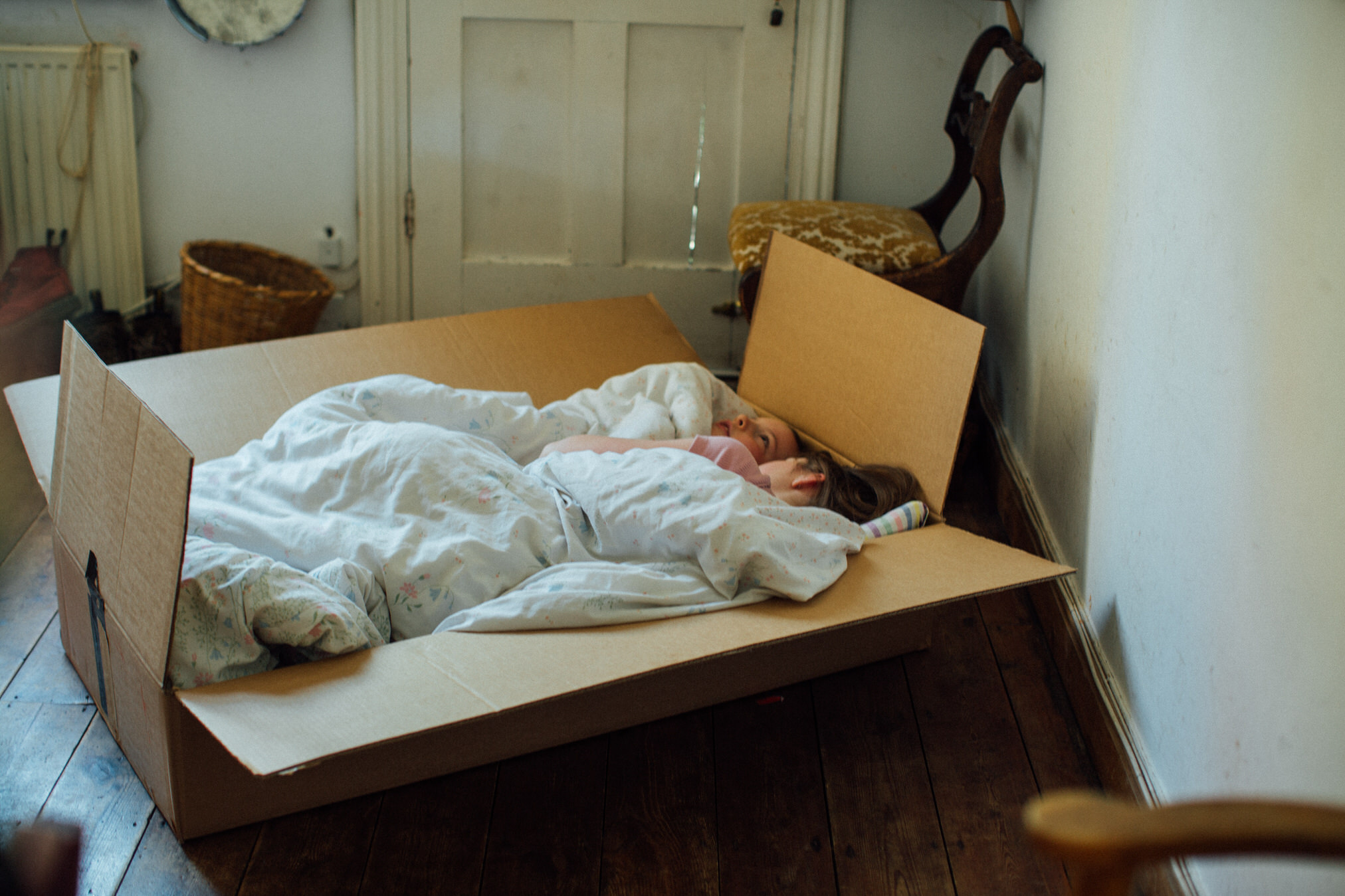
I’m also drawn to the humorous images.
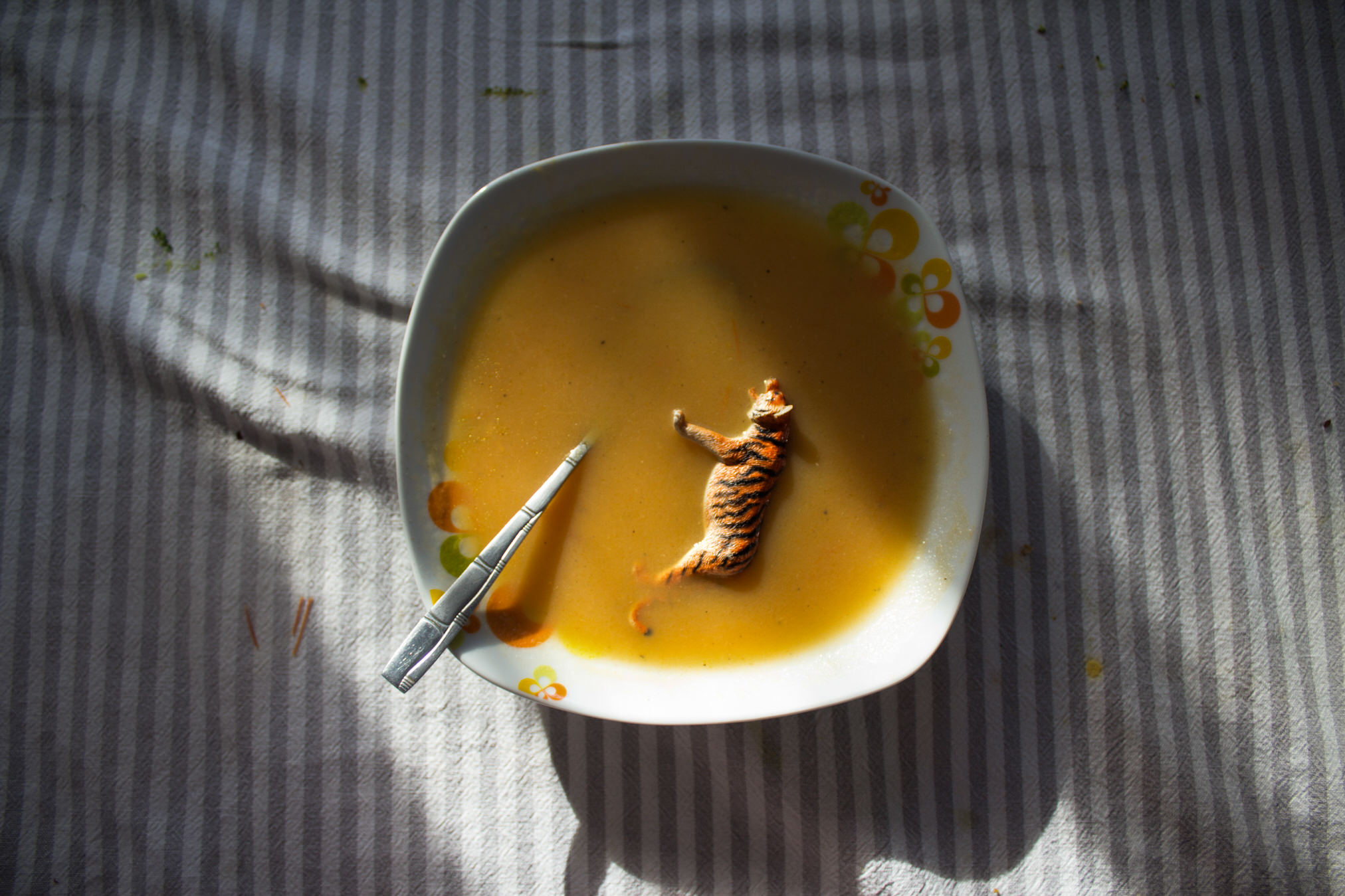
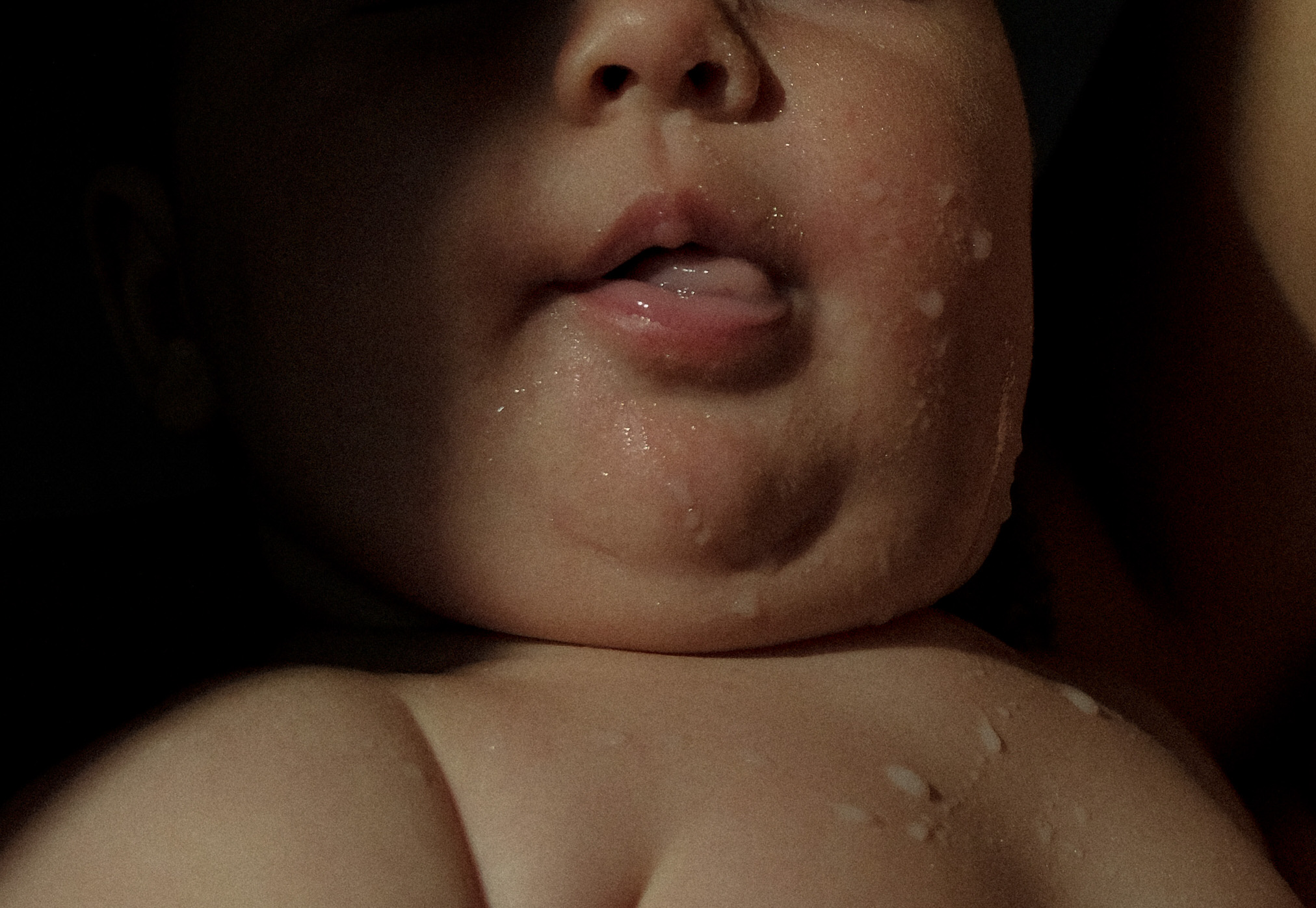
There’s one from Germany of a milk-drunk baby – chubby, covered in milk droplets, funny at first glance, but also a little menacing because you don’t see the eyes and the darkness behind the baby is so strong. It’s funny, but it’s also about the fleshiness of babies, the greediness of nourishment, the total physicality of care.
And then there are images that let you into the most private, unperformed parts of motherhood.
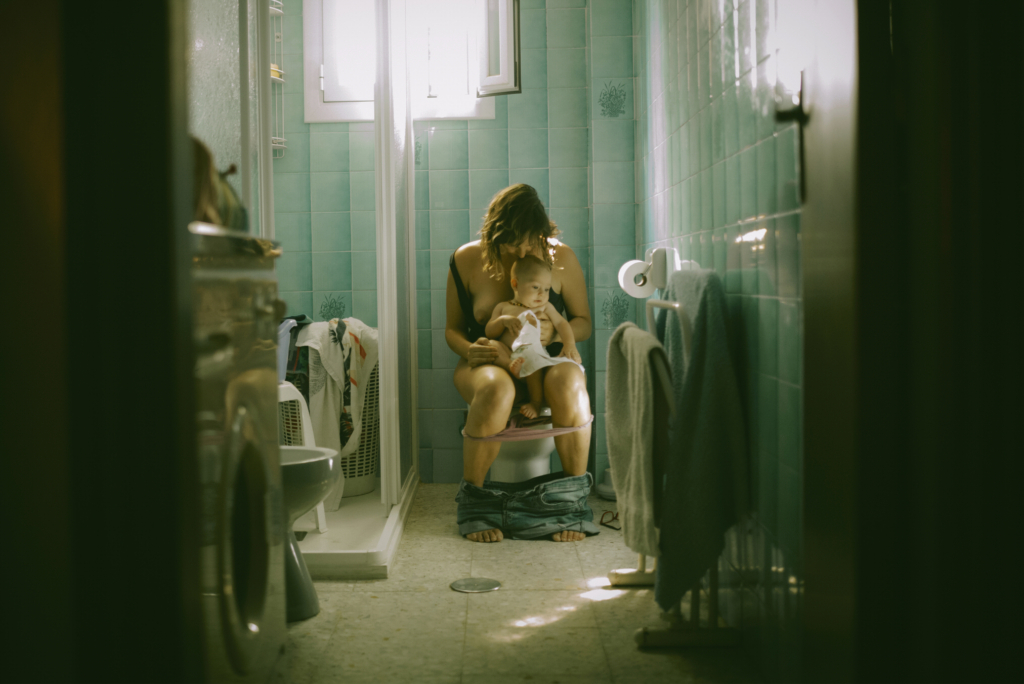
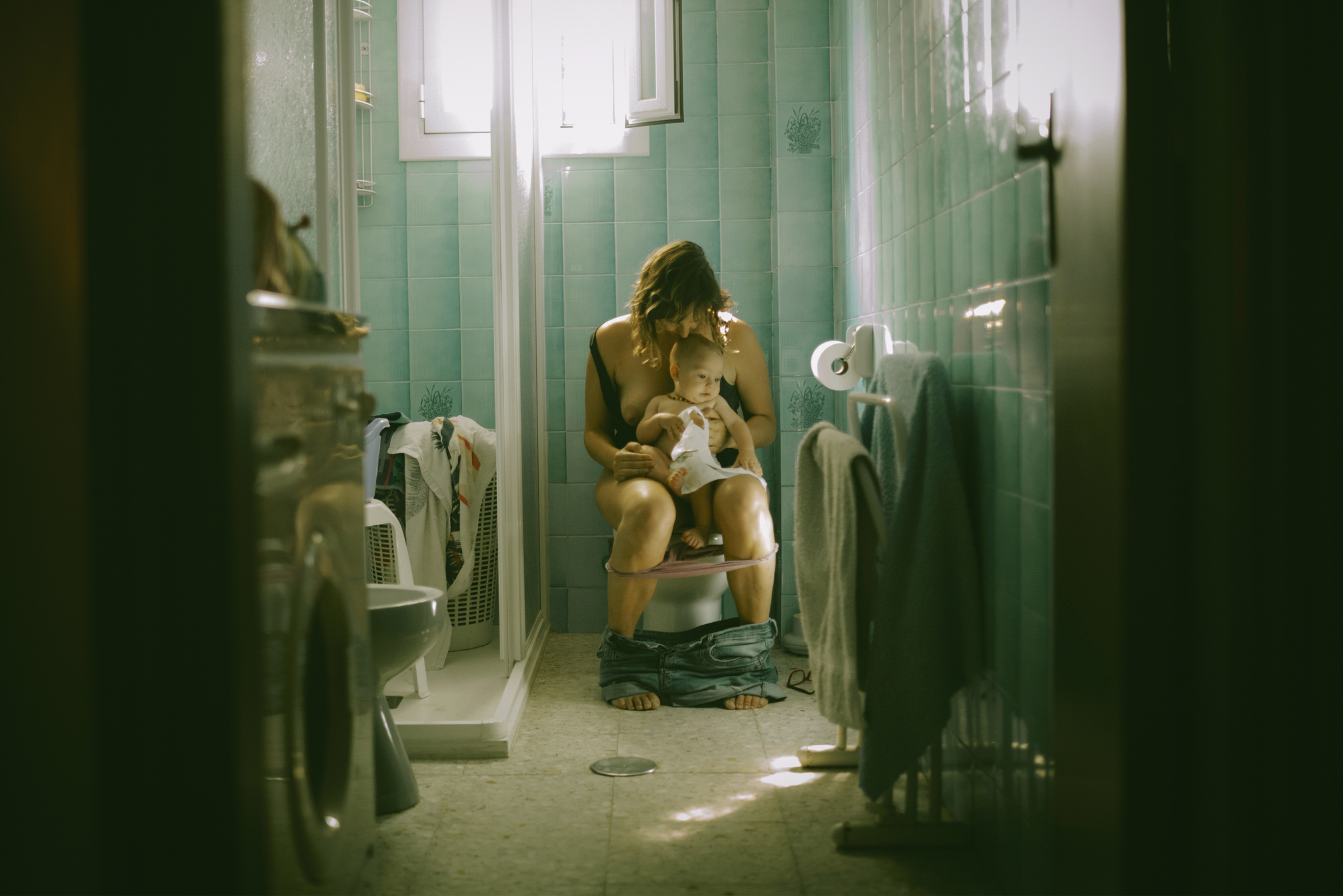
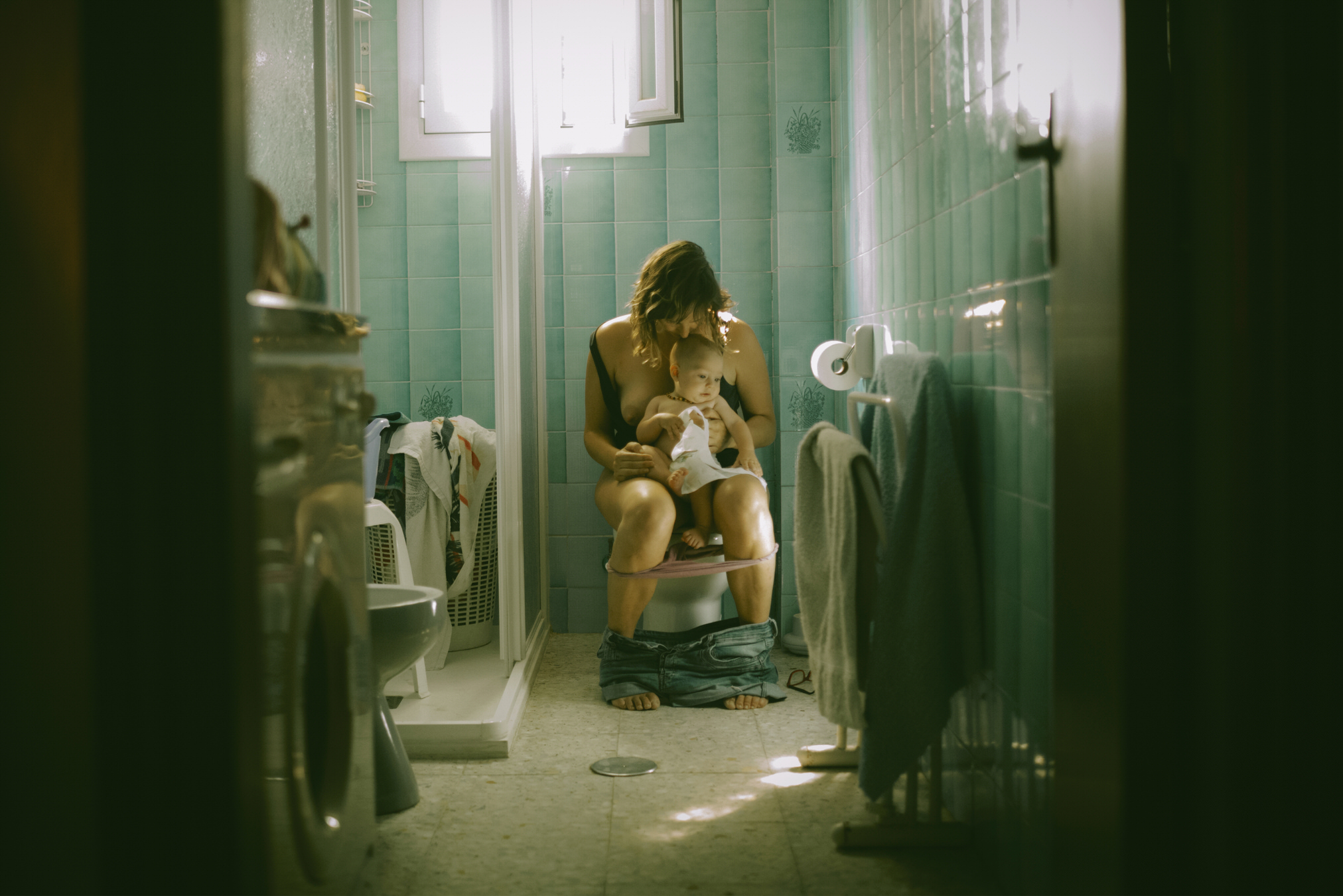
There’s a self-portrait of a mother on the toilet with her child on her – because that’s also motherhood, that you don’t even get to pee alone.
What I love there is not just the intimacy, but the fact that she’s making the image herself.
She owns the nakedness, the breastfeeding, the exhaustion. She claims the power back by depicting herself.
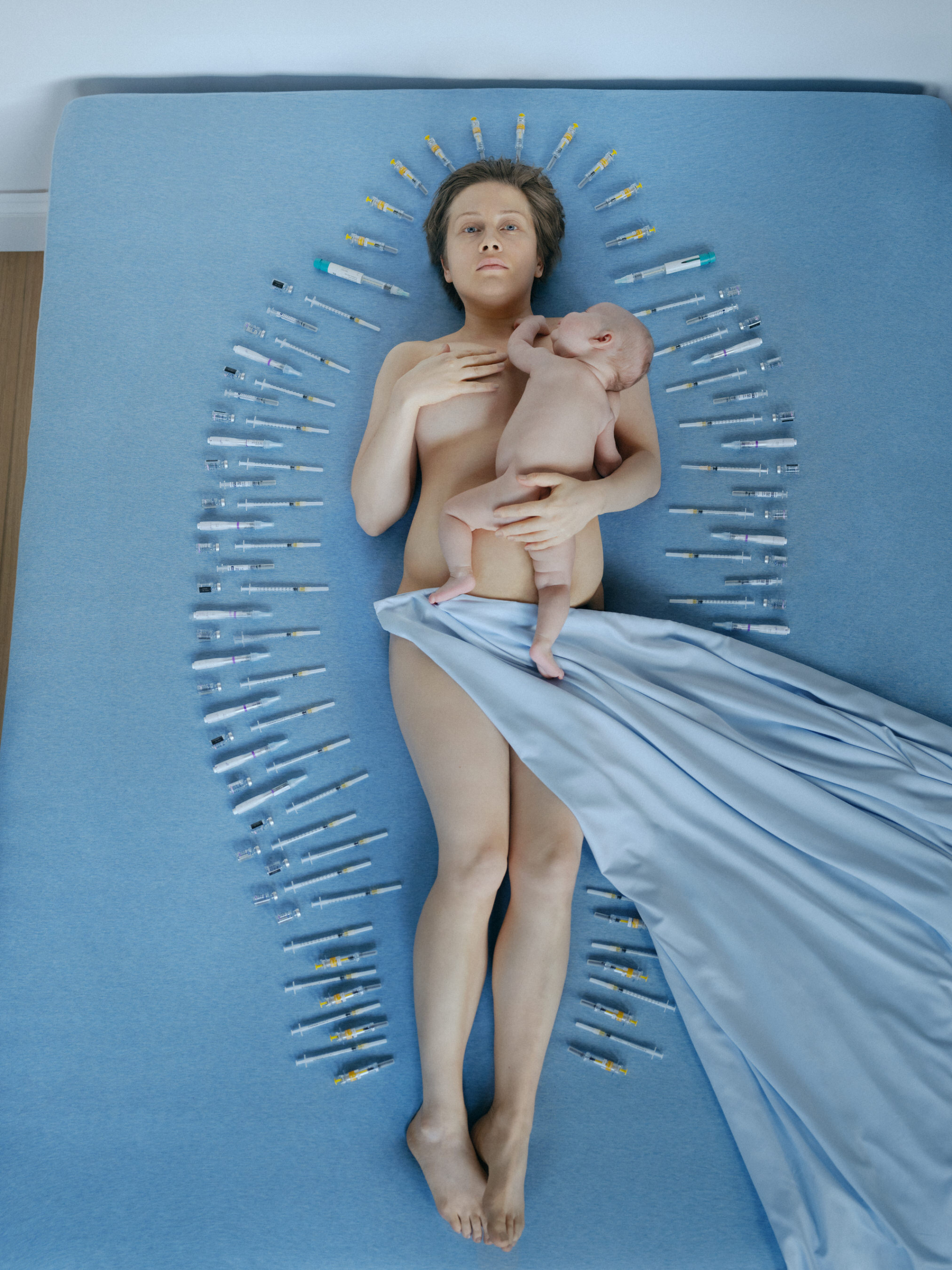
There’s also this insanely beautiful image of IVF.
She’s holding the baby in a very soft, almost Mariah religious like pose, but the halo around her is made of sharp, menacing objects.
That’s what makes the image so charged: the very thing that brought her the baby is also rendered as invasive, painful, almost violent.
The image came to feel almost like a kind of divine intervention – a strange meeting point between technology, suffering, and the arrival of life.
Final Thought
What Karni has made is not just a curated project, and not just a corrective. She has built a visual library of lived experience – one that gives form, weight, and continuity to images that have too often remained scattered, private, or unseen.
That matters, because photography has not only ignored mothers; it has repeatedly flattened them into symbols, or left them outside the frame of serious looking.
Eye Mama breaks that surface. It opens small peepholes in the glossy fiction that surrounds motherhood and lets something more difficult come through. Not the marketed version. Not the saintly version. Something stranger, more bodily, more accurate. These pictures are made by the women inside the experience, with all the doubleness that implies: they are living it, and witnessing it, at the same time. Karni describes one photograph in the book – a mother photographing her own birth – as the ultimate self-portrait. And she is right. In that image, the photographic act and the maternal act are not in conflict. They collaborate. The mother is not only giving life; she is also making meaning from inside the event itself.
That image becomes a key to the whole book.
To be a photographer is, in some sense, to stand slightly outside.
To be a mother is to be radically inside. Eye Mama holds those two positions together without resolving them. The mother and the photographer work in tandem for a single, unrepeatable second.
And in front of such an image, we almost become like the child in the frame: looking on as a new life appears, and understanding – if only for a moment – the near-mythic force of the mother as the one who creates life, and still has the clarity to witness it.
That is why the work feels important.
Not because it argues for motherhood as a theme, but because it expands photography from within it. What Karni has gathered here is not an identity category. It is a body of visual truth.